If you’re an Albuquerque homeowner, you already know how much our climate changes from month to month. Hot, dry summers give way to chilly winters that can drop below freezing. Your outdoor plumbing bears the full impact of that temperature shift. The right care for your outdoor plumbing can save you hundreds of dollars in repairs later. Here’s what every Albuquerque homeowner should know about sprinklers, hose bibs, and winter prep.
Understanding Your Outdoor Plumbing
Outdoor plumbing includes your irrigation lines, sprinkler valves, hose bibs (those outdoor faucets), and sometimes even outdoor kitchens or water features. While these systems are built to handle exposure, they’re still challenged by Albuquerque’s freezing nights and blazing summer daytime heat.
During the warmer months, small leaks or dripping valves can go unnoticed since evaporation happens so quickly in this dry climate. But once winter arrives, that same undetected leak can freeze—and frozen water expands. Even a minor crack in a pipe can turn into a major burst once the ice in the pipe thaws.
Follow these steps to protect all your outdoor plumbing:
Step 1: Inspect and Maintain Your Hose Bibs
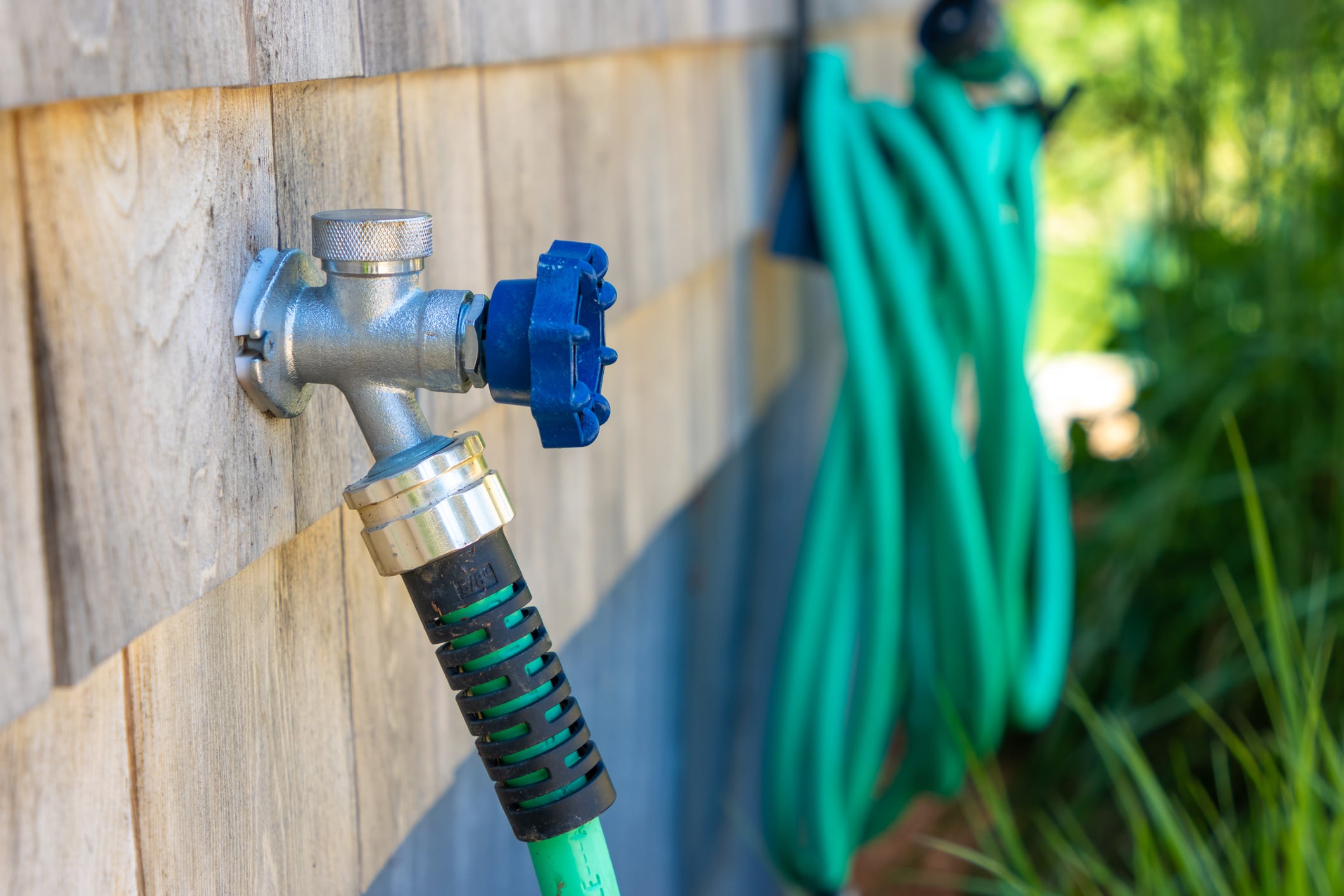
Your hose bib is one of the first places to freeze when temperatures drop. A few simple steps can protect it year-round:
1. Check for leaks. Before winter hits, connect a hose and turn the water on. If you notice drips from the handle or the connection, it may just need to have a new washer or a screw tightened. If the leak is steady, you might have a damaged valve seat (the part the washer pushes against as it shuts off the water). Repair it before the weather freezes.
2. Disconnect hoses before a freeze. Water left inside a hose can freeze and back up into the faucet, cracking the pipe behind your wall. Storing hoses in the garage can prevent that costly damage.
3. Use insulated covers. Foam faucet covers are inexpensive and available at any hardware store. They’re easy to install and can prevent your hose bib from freezing. For even better protection, consider upgrading to a frost-free hose bib. The shut-off valve is located deeper inside your house wall, where temperatures stay warmer.
Step 2: Give Your Sprinkler System Some Attention
All the elements of your sprinkler system—valves, piping, and sprinkler heads—are vulnerable to the elements. Regular maintenance keeps things running efficiently and helps avoid surprises in spring.
- Inspect sprinkler heads: Check that all heads rise properly and spray evenly. A misaligned or clogged nozzle wastes water and leaves sections of your lawn thirsty.
- Look for leaks or soggy patches: Soft or wet areas in your yard could signal a broken underground line. If your water pressure seems lower in one zone, you may have a hidden leak.
- Schedule a system flush: The minerals in Albuquerque’s water can build up and clog sprinkler nozzles. A quick flush or professional cleaning can restore performance and prevent uneven coverage.
Step 3: Blow Out or Drain Irrigation Lines Before Winter
Irrigation lines that contain water can freeze, expand, and crack underground pipes. Make sure to drain them before it freezes.
- Manual drain method: Some systems include manual drain valves that you can open to release trapped water. Be sure to close them when done.
- Automatic drain systems: If yours uses auto-drain valves, run your sprinklers briefly after shutting off the main system to release the pressure so the valves open.
- Professional blow-out service: Many homeowners choose to have a plumbing company blow out their sprinkler lines with compressed air. It’s the most reliable way to ensure there’s no trapped water anywhere in the system.
Step 4: Find and Know How to Use the Main Shut-Off Valve
Knowing where your main shut-off valve is located—and how to operate it—can be a lifesaver. If a pipe bursts or a freeze is on the way, shutting the valve can prevent extensive damage. This valve is often located in the garage, near the foundation, or close to where the water line enters the house.
Step 5: Plan Ahead for Winterization
While most winter days are mild, a sudden cold snap can drop temperatures below freezing without warning. Keep an eye on winter weather forecasts and before it freezes, winterize your irrigation system and hose bibs. It’s best to do this as a routine action in late fall. If you’re leaving town, shut off the water to outdoor systems entirely.
Know When to Call a Professional
Some tasks are best left to the pros. If you’re not sure how to drain your sprinkler system or repair a leaking outdoor faucet, we can handle that for you quickly and safely. We understand Albuquerque’s unique conditions and special requirements for outdoor plumbing maintenance. Call Rocketman Plumbing when you spot a problem or want assistance getting ready for winter. We’re ready 24/7 to send a well-trained team your way. Call us at 505-243-1227 for fast, accurate repairs and peace of mind.