
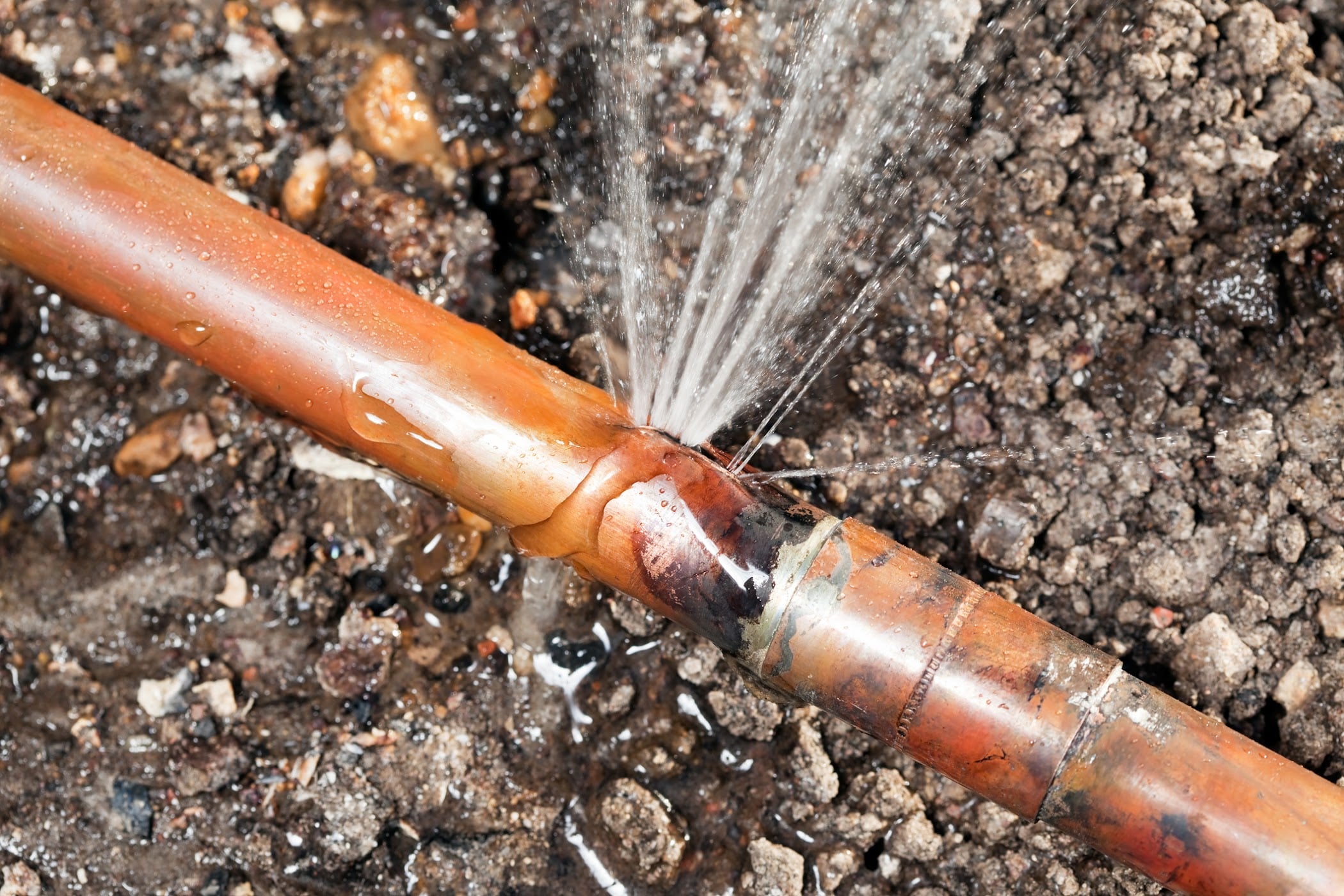
For decades, copper has been the gold standard for home plumbing lines. It’s tough, long-lasting, and naturally resists corrosion. But even copper isn’t immune to problems. Over time, it can fall victim to one of the most frustrating issues a homeowner can face: pinhole leaks.
Let’s look at exactly what causes these sneaky leaks, how to spot them, and what you should do to protect your home.
The Main Culprits Behind Pinhole Leaks
A pinhole leak is the result of a slow chemical or physical process eating away at the inside walls of your copper pipes. Here are the four most common reasons they form:
- Acidic Water: If your water is too acidic, it can slowly dissolve copper over time, eventually creating tiny holes in the pipe walls.
- Hard Water Minerals: Hard water leaves behind mineral deposits inside your pipes over time. These deposits can contribute to corrosion and eventually weaken the copper.
- High Water Pressure: If your water pressure is set too high, water travels through your plumbing system with excessive force. When it hits a sharp bend, it creates turbulence that gradually wears away at vulnerable areas in the pipe.
- Electric Current: In many older homes, the electrical system is grounded to the metal plumbing lines. If there is a loose ground wire, tiny stray electrical currents can travel through your pipes, causing a chemical reaction that gradually corrodes the copper.
How to Spot a Hidden Pinhole Leak
Because pinhole leaks are so small, they can slowly drip behind drywall or beneath floors for months before you ever notice them. That’s why it’s important to watch for subtle warning signs that water is escaping:
- Blue-Green Stains: When copper corrodes, it turns a distinct teal color. Green, crusty buildup along your visible pipes means they are actively corroding.
- Damp Spots or Bubbling Paint: If you notice a random patch of discolored drywall, soft wood, or paint that is starting to blister and bubble, a leak is likely dripping right behind it.
- A Jump in Your Water Bill: If your monthly water bill keeps creeping upward but your habits haven’t changed, you may have a hidden leak.
Temporary Fix for Pinhole Leaks
If you find a visible pinhole leak that is actively dripping, you can try a temporary fix until a plumber arrives:
- Shut off the main water supply to relieve the pipe pressure.
- Take a small piece of old rubber garden hose and slit it down one side.
- Wrap the rubber tightly over the pinhole leak.
- Place a metal hose clamp over the rubber patch and tighten it firmly with a screwdriver.
The compressed rubber may slow or temporarily stop the leak until a plumber arrives. Just remember: this is strictly a temporary fix.
Call Rocketman Plumbing for Help With Pinhole Leaks
Pinhole leaks are rarely a one-time isolated incident. If your water quality or pressure has caused a leak in one section, it means the rest of your pipes may be wearing thin as well. At Rocketman Plumbing, our courteous and well-trained technicians can inspect your pipes, identify potential leaks, and recommend the most effective and economical solution to protect your home.
Call Rocketman Plumbing today at (505) 634-7084 to schedule an inspection and protect your home’s plumbing system.