
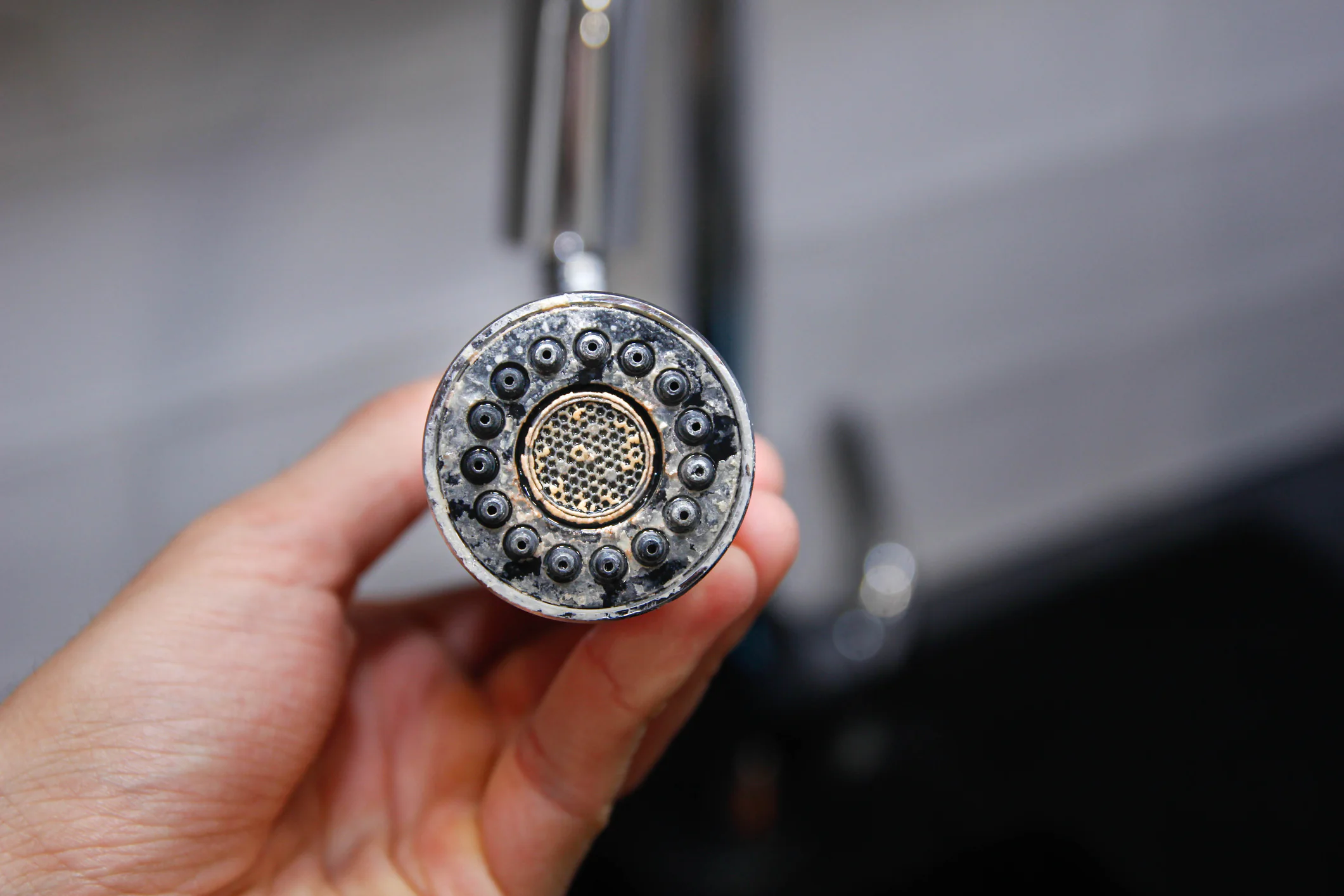
 If you live in Albuquerque or anywhere across New Mexico, chances are you’ve dealt with hard water. It’s a fact of life in our region, where deep limestone deposits add high levels of minerals to our drinking water supplies. While hard water isn’t hazardous to your health, it can quietly create costly problems for your home’s plumbing and appliances over time.
At Rocketman Plumbing, we often see the effects of hard water firsthand—clogged showerheads, pipes coated with minerals and water heaters failing prematurely.
Understanding how hard water affects your plumbing and what you can do about it can save you both water and money.
What Is Hard Water?
Hard water simply means the water coming into your home is loaded with dissolved minerals like calcium and magnesium. When this water runs through your plumbing system, these minerals leave deposits on your fixtures, dishes, skin, hair, and clothes. Most critically, they build up inside pipes in your water-using appliances or the plumbing system itself.
In Albuquerque, water ranges from moderately hard to very hard, depending on your neighborhood and water source. Over time, these mineral deposits—called scale—can cause real trouble for your home plumbing system.
How Hard Water Affects Your Plumbing
At first, hard water damage can seem minor. You may see chalky white residue around faucets. Or your water pressure weakens. Behind walls and inside pipes, the buildup is steadily growing thicker. Here’s what happens over time:
- Narrowed pipes restricting flow: Hard water creates layers of mineral deposits inside your pipes. As the opening in pipes gets smaller, water pressure drops throughout your home.
- Clogged showerheads and faucet aerators: Those small openings quickly collect scale, causing weaker flow and uneven spray.
Corrosion and early wear: Mineral buildup traps moisture, which can lead to corrosion around joints and fittings, especially in older plumbing systems. - Fixture deterioration: Rubber seals, valves, and moving parts in faucets don’t hold up well against the minerals in hard water. This often leads to drips, leaks, and earlier replacements.
Many Albuquerque homeowners first notice hard water issues when their showers lose pressure or their water heater doesn’t perform like it used to.
The Hidden Impact on Water Heaters
Your water heater can really suffer from hard water. Every time water is heated, minerals fall out of solution and form a hard, crusty layer—either at the bottom of a tank-style heater or on heating elements in a tankless model.
This buildup forces the heater to work much harder to heat up the water. Over time, that means:
- Higher energy bills as the system loses efficiency.
- Shorter water heater lifespan due to internal wear and overheating.
- Odd sounds like popping or rumbling caused by trapped sediment shifting inside.
We’ve replaced many water heaters in Albuquerque that failed far earlier than expected because of untreated hard water. Regular annual flushing of your water heater plus a water softening system can prevent this damage.
Signs Your Home Has Hard Water
These signs are easy to spot around your home. Watch for:
- White or cloudy spots on dishes and glassware.
- Soapy buildup or scum on sinks, tubs, and shower doors.
- Dry or itchy skin after bathing.
- Dull brittle hair that is hard to style.
- Laundry that feels scratchy or looks dull, even when freshly washed.
- Gradual drops in water pressure around your home.
If you’re seeing these signs, it may be time to test your home’s water hardness.
How Albuquerque Homeowners Can Protect Their Plumbing
There are practical, long-term ways to safeguard your plumbing system from hard water damage.
- Install a whole-house water softener: Water softener installation in Albuquerque can remove calcium and magnesium before they reach your pipes. Softer water prevents mineral buildup, protects your water heater, and leaves your skin and hair feeling noticeably better.
- Flush your water heater annually: Whether you have a traditional or tankless system, schedule an annual flush to remove sediment and keep your heater running efficiently.
- Use showerhead and faucet filters: These small attachments can reduce visible residue and improve water flow until you can install a whole-home solution.
- Book a plumbing inspection: An annual inspection can alert you to small problems that are likely to build up to major problems later.
Rocketman Plumbing Is Your Solution to All Hard Water Problems
Living with hard water is just part of life in New Mexico, but you can prevent harm to pipes, appliances, fixtures and more. Talk to us about the signs you’re seeing. We’ll advise you on the best solution for your home and budget.
And if mineral buildup is already causing problems, we’ve got the solution. Call us as soon as you see the signs and we can send a technician to you promptly. Call us at 505-243-1227